Separating the hype from the durable economics of the artificial intelligence revolution.

In every tech supercycle, investors are good at identifying disruptive technologies, but bad at picking the winners. AI is no different, except for the pace and velocity of growth, investment, and hype. And this time the incumbents are leading the charge.
This episode works through how to separate the hype from who actually captures the enterprise value, walking through four layers of the AI investment stack, and which of these layers will exist independently or get absorbed.
Joined by Kai Wu of Sparkline Capital, Jerry Neumann, retired VC investor and writer, and David Haber of a16z, we synthesize views and research to explore this very complex topic.
Topics Covered:

Chartered Alternative Investment Analyst Association
CAIA Association is a global network of forward-thinking investment professionals, redefining the future of capital allocation in a world where traditional and alternative investments are converging at an unprecedented pace. United by a commitment to improving investment outcomes, we lead with authority, educate to inspire, and connect people who turn insight into action. CAIA Association creates dynamic and captivating learning experiences designed to engage investment professionals at every level. Its programs – the CAIA Charter and the CAIA.nxt™ platform – offer critical levels of access to a comprehensive curriculum that equips the investment community with the skills and knowledge needed to build modern portfolios. CAIA Association is a global member-driven community of more than 14,000 professionals, united by a shared commitment to improving investment outcomes and building a more aligned, principled capital market system.

Founder and Chief Investment Officer of Sparkline Capital
Kai Wu is the founder and Chief Investment Officer of Sparkline Capital, an investment management firm applying state-of-the-art machine learning and computing to uncover alpha in large, unstructured data sets. Prior to Sparkline, Kai co-founded and co-managed Kaleidoscope Capital, a quantitative hedge fund in Boston. With one other partner, he grew Kaleidoscope to $350 million in assets from institutional investors. Kai jointly managed all aspects of the company, including technology, investments, operations, trading, investor relations, and recruiting. Previously, Kai worked at GMO, where he was a member of Jeremy Grantham’s $40 billion asset allocation team. He also worked closely with the firm’s equity and macro investment teams in Boston, San Francisco, London, and Sydney. Kai graduated from Harvard College, magna cum laude and Phi Beta Kappa.
Retired VC Investor and Writer
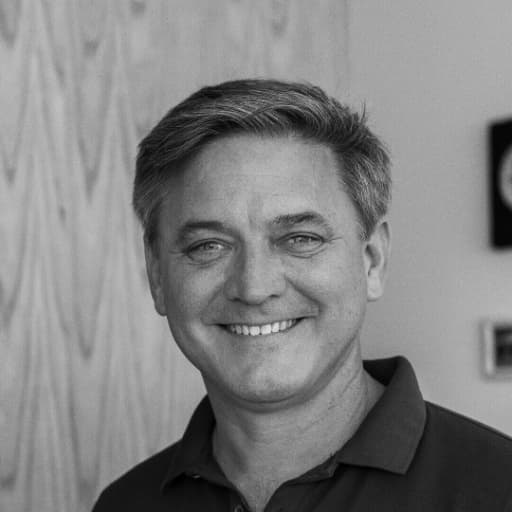
I write, online at ReactionWheel.net, at Colossus magazine, and a book (Founder vs Investor). I also taught entrepreneurship and innovation at Columbia University for 15 years. The Wall Street Journal once called me “responsible-sounding.” I used to invest in early-stage companies through Neu Venture Capital. I was named one of the “100 best early-stage investors” and one of the “most important VCs in New York” by Business Insider. Before Neu, I co-founded Root Markets, a pioneer in personal data protection. Before that, I ran the venture capital division of Omnicom Group, the world’s leading marketing services company, and was involved with the seed financing of many of the first wave of internet marketing firms. Prior to that, I was at Prodigy Services and Deloitte & Touche Consulting Group. I started my career at IBM as an engineer on the design team of the ES/9000 family of mainframes, where I was, among other things, responsible for the and/insert/multiply chips in the microcode execution engine of the central processor. The computer inside the computer inside the computer inside the computer.
General Partner at Andreessen Horowitz
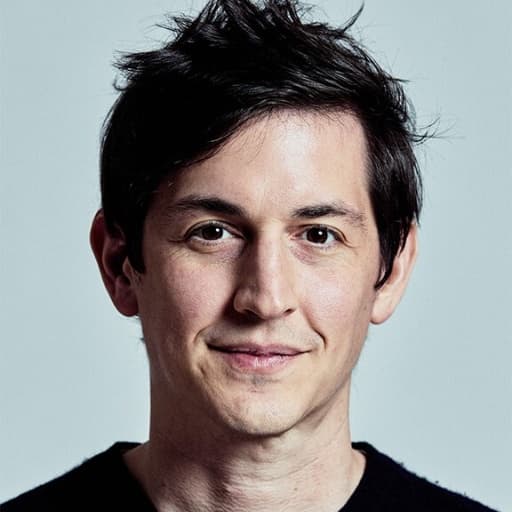
David Haber is a general partner at Andreessen Horowitz, where he focuses on technology investments in B2B software and financial services. He serves on the boards of Camber, Crux, Eve, Moment, Rutter, Setpoint, and Tennr. David was previously a senior executive in Firmwide Strategy at Goldman Sachs, where he helped lead partnerships, new ventures, and M&A. Before joining the firm, David was the Founder and CEO of Bond Street, which aimed to transform small business lending through technology, data, and design. Bond Street was acquired by Goldman Sachs in October 2017 as part of the firm’s digital finance business. Previously, David was a venture investor at Spark Capital and a founding associate of Locus Analytics, a start-up asset management firm. David graduated from Harvard University with a degree in Biochemical Sciences.
